Monday, February 16, 2026
Home Blog Page 49

Destination #2: India – Taj Mahal

The Taj Mahal – a love story carved in stone

The Taj Mahal – a love story carved in stone

Admittedly India in summer: India may be a bit hot in summer – but musically it doesn’t matter. There are no concerts in summer anyway. But as a reminder in autumn this is a hot tip: a trip to the Taj Mahal, India.

Built in the seventeenth century, the Taj Mahal lies on the outskirts of the city of Agra. This symphonic sketch reminds in a single sentence of the whole story, of the poetry and beauty of this wonder of the world. The work, divided into five parts, describes both its architecture as a whole and its hidden love story.

Construction of the Taj Mahal began shortly after the death of Mumtaz Mahal in 1631 and was completed in 1648. Over 20,000 craftsmen from many parts of South and Central Asia and various architects were involved, including Ahmad Lahori and the Persian Abu Fazel from Badakhshan (today Afghanistan). He merged Persian architecture with Indian elements into an outstanding work of Indo-Islamic architecture. The building materials were brought from India and other parts of Asia with the help of about 1000 elephants.

A widespread legend says that originally the same black marble building was planned as a mausoleum for Shah Jahan on the other side of the river Yamuna, but was not realized. On the opposite side of the “white” Taj Mahal was a park with a large water basin. The white Taj Mahal was reflected in this basin and appeared black in the water.

Shah Jahan was deprived of power by his son Muhammad Aurangzeb Alamgir and spent the rest of his life as a prisoner in the Red Fort. He was buried next to his wife in 1666. His tomb destroys the symmetry of the building, which proves that he intended to build his own tomb, especially as, to preserve this symmetry, he had a rest house built on the eastern side of the building, similar to the mosque on the western side.

The Taj Mahal is not located in the centre of the garden, as is usual for Persian tombs, but on the northern edge, suggesting that another tomb was planned on the opposite bank. The buildings separated from the river would then again have been in the centre of the now large garden area, as it corresponds to the Persian understanding of heaven as a Tschahār Bāgh . (Source: Wikipedia)

Destination #3: New Zealand – Milford Sound

At the other end of the world.

The Milford Sound is a fjord on the South Island of New Zealand. The 14 km long water is one of the most famous tourist attractions of the country and, as it is part of the Fiordland National Park in the southwest of the island, it belongs to the UNESCO World Heritage Site, where the region is registered since 1990 under the name Te Wahipounamu.

The British writer and poet Rudyard Kipling is said to have described the fjord as the eighth wonder of the world after visiting Milford Sound in the 1890s.

Long before the first European settlers found their way to the shores of Milford Sound, Māori came fishing, hunting and to find the coveted Pounamu (Jade). They believed in the creation of the fjord by Tu-te-raki-whanoa, a divine being.

After the discovery of the fjord by the first European, John Grono, in 1823, it took 56 years for the first settler to settle on the shores of Milford Sound. It was Donald Sutherland, a Scottish-born immigrant, who settled at Sound in 1879 and created a hostel there with his wife Elizabeth in 1891, providing accommodation for tourists and hikers. After their death in 1928, the hostel was replaced by a hostel built by the government.

From 1935 the construction of the Homer Tunnel began, which could only be opened in 1954. Through the tunnel it was possible for the first time to reach the Milford Sound via a road connection.

Musically one reaches the Milford Sound via the composer Roger Derongé and his composition of the same name Milford Sound. For Harmonie, Fanfare or BrassBand released.

If you want to present pieces about Maori culture, you can find them in the field “Full text search”, keyword Maori

Other works with keyword “New Zealand

Mystical stories from days long gone, collected by The Royal Band of the Belgian Air Force

Matty Cilissen has collected interesting stories.

Symphonic Wind Band
Tierolff for Band #36: The Light Stone, Royal Band of the Belgian Air Force, Conductor Cilissen, Matty

Conductor Matty Cilissen with his orchestra “The Royal Band of the Belgian Air Force” tells mystical stories from days long gone. It is interesting that on this CD from Belgium you can find some composers from Austria. With “The Light Stone” the Austrian Daniel Muck has contributed a story about the castle Liechtenstein, which illuminates the historical history of this castle. Musically, the structure of this mighty castle is first described as a Renaissance-like chapel. Slowly but surely the work develops into a full, enriched sound, which shows the perfection of this building. After some time the Ottoman troops began to attack the Austrian lines. Not only was the “bright stone castle” badly damaged, but many people also had to endure this long period of terror, in which plundering, robbery and death were the order of the day.

Thomas Asanger and Fritz Neuböck, two other Austrians, provided their contributions with the legend about the Dolomite Crown (The Corwn of the Dolomites) and the story about the Traunfall (Where the River Falls). “The Crown of the Dolomites” is regarded as the most important legend in East Tyrol in Austria and tells of the friendly and circumspect Dolomite king who is to be overthrown by the evil troll and his followers. With rough slogans, shortened contents and populist demands the mood against the benevolent king is created. This legend has an important message for us: to question populist views well and to side with those who honestly stand up for the welfare of the people, but renounce loud expressions of opinion and formulate their concerns rather modestly and cautiously.

The canal at the Traunfall was at that time a technical masterpiece that made navigation on the Traun easier. It had a length of 396.5 m and a changing width of 6.1 m on average. The passage through this raft lane took 54 seconds and was very risky with the means at that time. The community “Roitham am Traunfall” lies in the heart of Upper Austria, directly on this beautiful river. The waterfall (Traunfall) and the late Gothic church with its first mentioned documents from the year 1350 form the heart of the composition “Where the River Falls” by Fritz Neuböck.

In order to emphasize the international character of the CD, there are of course also works by international composers. The Belgian Benoit Chantry tells the story about Stonehenge (Circle of Stones), where more than 4000 years ago people built huge circular stone structures, which still fascinate today and give scientists many riddles. This composition, which begins with a majestic theme inspired by the Celts, illustrates both the long pilgrimage, the work on the stones, the architecture of the place and the mystery that reigns in Stonehenge. A slow theme, like a prayer, then recalls the probably sacred character of the place. The work ends with the summer solstice ritual: From the inside of the stone circle one could see the sun rising to the northeast, just above a stone set up outside.

The Singapore-born composer Benjamin Yeo has a very short but effective performance: “1’10” lasts his sinfomic fanfare “Quintillusion!“, which he wrote for the Asian Bands Exchange Concert in Senzoku, Japan (2013). Thomas Asanger presents himself with his piece “Festival Sounds“, which was commissioned in 2017 by the Mecklenburg-Vorpommern State Police Orchestra on the occasion of its 70th anniversary and premiered on 4 May 2018 under the baton of Chief Conductor Christof Koert.

In “A Taste Of Ireland” the arranger Johan Nijs takes us on a fantastic journey through the beauty and diversity of Ireland. This fresh arrangement includes the following traditional folk songs: The Galway Piper; Believe me if Those endearing Young Charms; Bunker Hill; The Irish Washerwoman;

Concerto Con Due Trombe” is a concerto for 2 trumpets, strings and harpsichord, originally in D major and played on piccolo trumpets. In his transcription, Fritz Neuböck chose the key of B flat major, with which the work can be played on “normal B flat trumpets”. The use of a harpsichord is possible ad lib, but certainly not absolutely necessary.

Then there is the beautiful piece by Freddie Mercury: Love of my Life (arranged by Rob Balfoort); “Siciliano” by Johann Sebastian Bach (arranged by Willy Hautfast); “Charisma” by Louis van Dijk, arranged by Frank van der Poel; Ivo Kouwenhoven arranged the romantic ballad “A Chloris” by Reynaldo Hahn; all in all a round piece.

Aretha Franklin – A Natural Woman

0

Aretha Louise Franklin: 1942 – 2018

Aretha Franklin
Aretha Franklin – Queen of Soul (Photo: Ricardo, Cecilio)

Aretha Franklin was an American singer, songwriter, actress, and pianist. Franklin began her career as a child singing gospel at New Bethel Baptist Church in Detroit, Michigan where her father C. L. Franklin was minister. At age 18, she embarked on a secular career recording for Columbia Records. However, she achieved only modest success. Franklin found commercial success and acclaim after signing with Atlantic Records in 1966. By the end of the 1960s, Aretha Franklin had come to be known as “The Queen of Soul”.

(You Make Me Feel Like) A Natural Woman is a 1967 single released Aretha Franklin. The song was co-written by Carole King and Gerry Goffin, with input from Atlantic producer Jerry Wexler. The record was a big hit for Franklin, reaching number 8 on the Billboard Hot 100, and became a standard song for her. Franklin also included a live recording on the album “Aretha in Paris” in 1968. Versions have also been performed and recorded by Mary J. Blige, Celine Dion, Carole King herself and many others. At the 2015 Kennedy Center Honors, Aretha Franklin performed the song to honor award-recipient Carole King

(You Make Me Feel Like) A Natural Woman – published for Harmonie- oder Fanfareorchester by Music Publishing Tierolff, Netherlands (Arrangement Robert Balfoort)

Musical travelogues: a cruise from the port of Scomegna

Many cruises start in Italy

Scomegna New editions 2018 fpr Concert Band

Join us on a musical journey. We leave from the Italian port of Scomegna. Scomegna is, of course, not a port, but a publishing house. Nevertheless, it will be an adventurous travelogue. Follow us…..

First we visit the family Altavilla, Normans who conquered southern Italy in 1061. Then we ascend to Castel del Monte, a 13th century citadel and castle located on a hill in Andria in the region of Puglia in southeast Italy. In the following episode of our journey we learn more about the three sirens Leucosia, Ligeia and Parthenope, which could not enchant Odysseus and were overwhelmed by grief. They found death in the deep sea and their bodies can be found today as islands: Parthenope (today Naples), Aegean (on the coasts of present-day Calabria) and Leucosia, today the small island Licosa in Castellabate. Passing the island of Sardinia, we learn more about the Sardinian language and what the word Noda actually means exactly.

Then we head north to the spectacular Waterfalls on Iceland: Goðafoss, Fjallfoss, Skógafoss and Dettifoss. Periplo with his stories and discoveries accompanies us into the new world, where we learn something about the early history of America with “Old American Songs“. In South America we meet Astor Piazzolla with his Libertango and a Latin Band invites to a dance.

On the crossing there is of course a show program with current hits from popular music and finally the whole travel group sings “Oh Happy Day” and before entering the Scomegna home port still the song “What a wonderful World“.

With the catalogue “Scomegna, New Editions for Concert Band 2018” you can put together your own travel programme. We have integrated sound recordings, scores, videos and many text hints and further links for you.

WASBE Conference 2019 in Buñol, Spanien

WASBE Conference from 10 to 13 July 2019

WASBE-Konferenz in Bunol, Spanien

The city of Buñol (Spain) will be the hotspot for the next International WASBE Conference on 10-13 July 2019. Bunol is a municipality in the province of Valencia and the area is considered one of the most important strongholds in Spanish brass music.

WASBE was founded in Manchester (Great Britain) in 1981 and has been a member of the United Nations Cultural Organization UNESCO since 1989. In 2007, WASBE and its national organisations had more than 1200 members from more than 50 countries. The aim of the WASBE is to make symphonic wind orchestras known to the public as serious musical orchestral forms and serious cultural sponsors. The organisation promotes the international distribution of original compositions for symphonic wind orchestra, i.e. works composed especially for this form of orchestra. It awards composition commissions and conducts composition competitions, organises worldwide exchange programmes for musicians and conductors, and organises further training measures and conferences. An international conference was held for the first time in 1983 and since then has been held every two years at various locations, including Norway, Belgium, the USA, the Netherlands, Great Britain, Spain, Japan, Austria, Switzerland, Sweden, Singapore, Ireland and Taiwan. WASBE publishes the annual WASBE Journal and the quarterly international wind magazine WASBE World.

If you would like to perform with your orchestra at this conference, all information and registration forms can be found on the WASBE homepage.


George Walker, Trailblazing American Composer, Dies At 96

Pulitzer Prize-winning composer, pianist and educator has died

George Walker, 1922 – 2018
Source: georgetwalker.com

Pulitzer Prize-winning composer, pianist and educator George Walker has died at the age of 96. Walker’s music was firmly rooted in the modern classical tradition, but also drew from African-American spirituals and jazz. His nearly 100 compositions range broadly, from intricately orchestrated symphonic works and concertos to intimate songs and solo piano pieces.

“His music is always characterized by a great sense of dignity, which is how he always comported himself,” says composer Jeffrey Mumford, who, as a music professor at Lorain County Community College in Ohio, uses examples of Walker’s music in his classes. “His style evolved over the years; his earlier works, some written while still a student, embodied an impressive clarity and elegance.”

In 1996, Walker broke new ground again when he became the first African-American composer to win a Pulitzer Prize for music. Lilacs for voice and orchestra, set to a text by Walt Whitman, is a moving meditation on the assassination of President Abraham Lincoln.

Walker’s reputation as a composer of works for orchestras like the New York Philharmonic, the Cleveland Orchestra and the Boston Symphony slowly grew and Walker’s fame was hard-won.

Walker is often identified as an “African-American” composer instead of simply an American composer. In a 1987 interview with broadcaster Bruce Duffie, Walker said there are two sides to that label.

“I’ve benefited from being a black composer in the sense that when there are symposiums given of music by black composers, I would get performances by orchestras that otherwise would not have done the works,” Walker said. “The other aspect, of course, is that if I were not black, I would have had a far wider dispersion of my music and more performances.”

Walker had a long and distinguished academic career. He held teaching posts at New York’s New School, Rutgers University in New Jersey (where he chaired the music department), the University of Colorado, the Peabody Institute in Maryland, the University of Delaware and at Smith College, where he became the first black tenured faculty member. Walker received two Guggenheim Fellowships, an American Academy of Arts and Letters Award, and honorary doctorates from six institutions, including Oberlin and Spelman Colleges. In 1997, Washington D.C.’s mayor, Marion Barry, declared June 17th as George Walker Day.

Quelle: Tom Huizenga, npr-Music

Works for:
Orchestra/chamber music
Ensembles
Educational and/or solo works
Vocal
Choir/Vocals

20 composers present a publishing house and a man: Louis Martinus

Louis Martinus, publisher and arranger (source: HaFaBra)

HaFaBra-Music

The name doesn’t mean anything to you? No shame, most musicians do. Louis Martinus is the owner of the Belgian publisher HaFaBra-Music. Founded at the beginning of 1993, the publishing house has qualified as an internationally active publisher. Over the years, the publishing houses “Jive-Music” and the most important editions of “Musica Mundana” were also acquired. Furthermore, HaFaBra is representative of the American publishing house “FJH Music” for Europe (in return, FJH presents the publishing house HaFaBra-Music in the USA).

The edition HaFaBra has existed for 25 years now and on this occasion Louis Martinus presents 20 composers of his publishing house (click here), who have decisively shaped the way of the house. This list contains a selection of works in grades 3 to 6. Among them are such well-known names as the Japanese Naoya Wada, Paul Hart and Derek Bourgeois from England, Alexander Kosmicki from France, the Americans James Barnes and Stephen Bulla, as well as the Persian Amir Molookpour. This alone shows the international character of the publisher.

If only works of the higher performance level are included in this list, this does not mean that the publisher is not also active in the lower class. In addition, you will find works of level 1 and 2 for harmony orchestra. Well, who does not find there, is hopelessly lost……

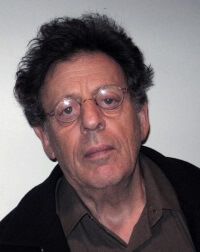
Composer Philip Glass receives 2018 Kennedy Center Honors award

Cher, Philip Glass, Reba McEntire and Wayne Shorter receive the 41st Annual Kennedy Center Honors Prize 2018

Photo: WNYC New York Public Radio, CC BY-SA 2.0, Link

The John F. Kennedy Center for the Performing Arts is the largest cultural center in Washington, D.C. It was posthumously named after John F. Kennedy, the 35th President of the United States.

Since 1978, the Kennedy Center Honors have been awarded every December to selected performing artists for their lifelong contribution to American culture. The celebrations extend over a weekend and include a festive lunch at the Kennedy Center, a reception and dinner at the U.S. State Department, the presentation of medals on the ribbon at the White House by the U.S. President, and a festive evening gala at the Kennedy Center Opera House.

On December 2, 2018, the Kennedy Center Honors will hold its 41st annual national celebration of the arts. Artists to be honored in 2018 include singer and actress Cher, composer and pianist Philip Glass, country entertainer Reba McEntire and jazz saxophonist and composer Wayne Shorter.

Philip Glass is not unknown in Europe either, some of his works have been premiered in Linz and other European cities. “Linz is my second home,” he says himself. He had a long-standing friendship with Dennis Russell Davies, former conductor of the Bruckner Orchestra Linz, which led to “two operas (Kepler; Spuren der Verirrten) and three symphonies (Nos. 8, 9 and 11) by Glass. (derstandard.at)”

Russian composer across the skies of the world

Since 14.06.2018 the name Alexander Scriabin floats over all the skies of the world.

Scriabin is amazed at the honor given

The Russian airline Aeroflot has expanded its fleet with a new Boeing B777-300ER long-haul aircraft. The aircraft was named in honour of Aleksandr Scriabin, Russian composer of piano and orchestral music.

The new B777-300ER aircraft is equipped with business-class, economy and comfort class cabins, offering a total capacity of 402 seats.

Passengers flying the Comfort Class enjoy a premium service at extremely competitive prices. These include extra legroom and baggage allowance, an improved menu and more Aeroflot bonus miles as well as a warm welcome to Russia and Aeroflot’s award-winning in-flight service.