International youth wind orchestras compete in the various categories of the CISM.
CISM – International Competition for Youth Wind Orchestra 2019
The International Music Confederation CISM (Confédération Internationale des Sociétés Musicales) in cooperation with Mid EUROPE is organising the International Competition for Youth Wind Orchestras as part of the festival. This competition for youth orchestras offers a wonderful opportunity to face an international jury and make fantastic new contacts with the big world of wind music. In addition, every orchestra, musician and conductor can learn a lot from each other. One can further develop one’s own orchestra strengths and actively work on the development potentials in order to continuously develop the quality of the orchestra positively. It is also possible to experience impressive music in breathtaking surroundings and make new friends.
The CISM Competition for Youth Wind Orchestras will take place in Schladming (Austria) between 09 and 14 July 2019. Interested orchestras can find more detailed information and registrations under this link.
WASBE announces the second edition of the WASBE Composition Competition.
2nd WASBE International Composition Contest
The International Composition Contest is an initiative sponsored by WASBE that is open to composers from around the world. The concept is to encourage both young and experienced composers to write original compositions of high artistic merit for the school/educational band, as well as works for community bands. WASBE has a vast, world-wide network, and the organization has been promoting the participating and winning compositions and composers of the 1st WASBE International Compositions Contest, organizing performances world-wide with WASBE members, band directors and ensembles.
With the International Composition Contest, WASBE’s aim is to connect composers, band directors, and concert performances. Additionally, WASBE aims to promote the works and performances of the works on the internet and to connect the works with publishers interested in the new repertoire. In short, WASBE is dedicated to completing the musical cycle of the works: creation/composition, performance, and the promotion to all WASBE members of the works and composers, and the events involved.
In this 2ndEdition, the categories are: Category 1: Works for Band Grades 2 and 3; Duration: 6-10 min. Category 2: Works for Band Grades 4 and 5; Duration: 8-14 min. Category 3: Works for Symphonic Winds; Duration: 8 to 14 min.; Difficulty: Grade 5 and 6 Category 4: Works for Solo Instrument with Wind Band Accompaniment; Duration: 8-14 min. Solo Difficulty: Grade 5; Ensemble Difficulty: Grade 3-4
The deadline for submitting the composition is April 12, 2019 (category 1-3) and February 08, 2019 (category 4)
More information on https://wasbe.org/composition-contest-2
is a brass music compilation by HaFaBra-Music containing bestsellers and current issues from the years 1993 to 2018. It contains original works for wind orchestra, light pieces, film music, French chansons, marches, expressive compositions, works for young band and solo pieces in all grades. We have linked background information, work reviews, videos and sound recordings.
The Dutch publisher Tierolff has put together a varied programme for all wind orchestra levels in its new catalogue “The Light Stone“. From works for young bands to works for art academy orchestras, everything can be found. Beautiful travel reports, such as about Machu Picchu, Stonehenge, or a visit to a Sunday market. Then there are the scary stories, such as about the “Crown of the Dolomites” which is considered the most important legend of East Tyrol in Austria. Or even the story about the “Dance with the Devil“. Actually no dance at all, but a brawl:
“It was near midnight when the ” Smith of Thann ” began to tell his story. It was so gruesome that all the listeners’ hair rose to the mountains and it ran cold over their backs. Suddenly – the clock in the tavern struck the twelfth hour with dull blows – the blacksmith, who had just finished his story, jumped from his seat and stared with wide open eyes at the slowly opening door through which the devil stepped into the inn. Grinning scornfully, as only the devil can, he approached the blacksmith, grabbed him and tried to kidnap him. But the blacksmith fought back, and a massive brawl began.“
You can read for yourself how this story ends.
Of course there is also a lot of popular music, solo pieces, marches and transcriptions. We have linked all the works with links, information, videos and sound recordings.
A composition that gives pleasure to children in Uganda.
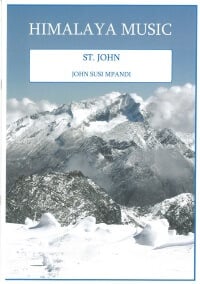
St. John, fröhliche Musik aus Afrika
John Susi Mpandi is completely unknown in Europe. But in Uganda he is highly revered by thousands of children and their parents. Who is this John Susi Mpandi? Unfortunately we didn’t find a photo of him, so we can only describe him with words: Mpandi was born in 1968 in Uganda and studied orchestral conducting and composition at Fontys Conservatory Tilburg {nl) with Hardy Mertens, Louis Buskens and Martijn Smith. He is musical director of the Kamuli Brass Band and the Ignaga Community Brass Band. At the same time he helps orphans and poor children in his home country Uganda by offering them food, education and music. This is financed by donations and income from compositions for youth orchestras.
The publisher Tierolff has now included a work in its programme that supports this idea. St. John is the title written for Flexible Bands from 4 voices and percussion. It is easy to play for any kind of wind orchestra, mainly of course for the youth (for whom he also composes in Uganda). But, the work could also fit well for an adult orchestra, if you want to support the idea of John Susi Mpandi. At the same time you bring an African feeling to your concert. Listen and see into the composition St. John…..
Well, it would be a laugh if you couldn’t help this composition to be a corresponding success. The publisher provides 100% of all income to the Mpandi organization in Uganda.
Tirol Musikverlag – Member of the “Association for Music Information”
In the 70s to 90s of the last century, Tyrolis was better known for the production of MC, later CDs of folksy music and a wind orchestra. A whisper went through the small music world, when the “Tirol Musikverlag” was taken over into the Tyrolis assortment. Now the publishing house is very active and promotes the editions of composers like Norbert Rabanser, Mathias Rauch. Franz Posch, Engelbert Wörnle – to name but a few. The focus is on folk music, Bohemian brass music, marches, waltzes, etc. Not for nothing one finds printed music of groups like the Innsbrucker Böhmische, Blechberg Musikanten, Viera Blech etc.. Many editions are available for small and large brass ensembles. There are also editions for various brass ensembles. Tirol Musikverlag is a member of our database and enters its editions into the database itself. All novelties of the year 2018 can be found here:
In an interview Charles Aznavour once said that he hadn’t celebrated a birthday since his 50th birthday. He wanted to make up for that by celebrating his 100th birthday. He has succeeded a lot in his long life as an artist, at least not, we know now. He died on 1 October at the age of 94 in his house near Paris.
His real name was Shahnour Varenagh Aznavourian, who refers to his Armenian origin. His father Mischa Aznavourian, his mother Knar Baghdasaryan and his sister Aida, who was born in Greece during the trip from Armenia, were temporarily stranded in France waiting for a visa for the USA. Indeed, his family did not know at that time that they would settle here indefinitely. Charles was born on 22 May 1924 in Paris.
His father was a hard worker, but he was more talented in music than in running a business. His restaurant, Le Caucase, invited Hungarian orchestras and offered free lunch to the less fortunate and also to some friends. This didn’t take long, of course, as the company made very little profit. The mother, who was studying literature, had to work temporarily as a seamstress.
But the true interest and passion of his parents were the shows they produced with their immigrant friends for the diaspora. Charles started his career in show business at a very young age. Together with his sister they appeared now and then in plays.
His career began at the end of the war. At school Charles met Pierre Roche, a very talented pianist. They composed music together and wrote texts for themselves and later for others. Raoul Breton, called “La Marquise”, was responsible for introducing them to French show business, especially Edith Piaf. He wrote several songs for them and became their manager. This collaboration developed into a very strong friendship. She invited them to tour the USA between 1947 and 1948. Thus began his international career as secretary and pianist of Edith Piaf, who also promoted his artistic career.
The rest is history. Charles Aznavour has recorded over 1000 chansons, 800 of which he wrote himself. About 200 million records were sold worldwide. He was also Armenian ambassador in Switzerland and permanent representative of Armenia to the United Nations in Geneva.
Scapino, A Comedy Overture – Music: William Walton – arrangement: Paul Noble
Two merchants go on a business trip and each leave their sons in the care of their servants. During their absence, one son marries a poor girl and the other falls in love with a gypsy woman.
The way in which the two servants deceive their masters regarding the complicated situation with lies and intrigue is told musically by the work “Scapino, A Comedy Overture” by William Walton, adapted by Paul Noble,
Only for first-class music bands. Available as print and download edition. Published on Bandmusicpdf.net/MDS-edition
The “Sagrada Familia” is a highlight of every visit to Barcelona.
Sagrada Familia
The Basilica Sagrada Familia is the most famous landmark of Barcelona and one of the most impressive sights of the city. The church is huge in size. It is often called “cathedral”, but without having a bishop’s seat.
In the middle of the 19th century, José María Bocabella planned to build a church in Barcelona and to dedicate it to the Holy Family “Sagrada Familia”. He chose a plot of land still within the street grid of the then “Poblet” (small village), in today’s Eixample district. A property closer to the city centre was not possible due to the already high property prices at that time.
The diocesan architect Francisco del Villar initially planned the church. He designed a church in the gothic style and the work on the church began in 1882 with the construction of the crypt. Due to fundamental disagreements with Bocabella, however, he had to resign from his commission. A few months later, in 1883, the young architect Antoni Gaudí took his place. Gaudí found his life’s work there and worked on the Sagrada Familia until his death on 10 June 1926.
Under Gaudí, the church gained its expansive dimension and lavish design. He was convinced that the city of Madrid would one day be known for “his” church.
Today, the unfinished building is one of the most important sightseeings of Barcelona and has been attracting numerous tourists for many decades. In 2014, 3.2 million visitors came. The annual budget was 25 million euros. This is completely in the spirit of Gaudi: “The Sagrada Familia is the work of the people for the people”. Everything is possible at the same time: construction work, visits and church services.